A Pilgrim's Guide to Edgerunners Easter Eggs in Cyberpunk 2077
Cyberpunk: Edgerunners Easter eggs and Night City landmarks evoke haunting nostalgia for CD Projekt Red fans.
The neon-soaked megabuildings of Night City have always had a way of swallowing stories whole, but some tales refuse to vanish into the static. In 2026, three years after the anime miniseries Cyberpunk: Edgerunners reignited passion for CD Projekt Red’s dystopian masterpiece, explorers still comb the streets like digital archaeologists unearthing the bones of a bygone crew. The 13-episode saga of David Martinez and his doomed gang, set in 2076, left behind a trail of ghosts that the game's 2077 timeline preserved with surgical care. For those who wept at the ending and then booted up the game to walk in V’s shoes, these Easter eggs aren't just fan service—they're pilgrimage sites where the past bleeds through the concrete like an old wound under a fresh layer of synth-skin. Here is a curated journey through the most haunting landmarks, a treasure map for anyone ready to raise a glass to a Night City legend.
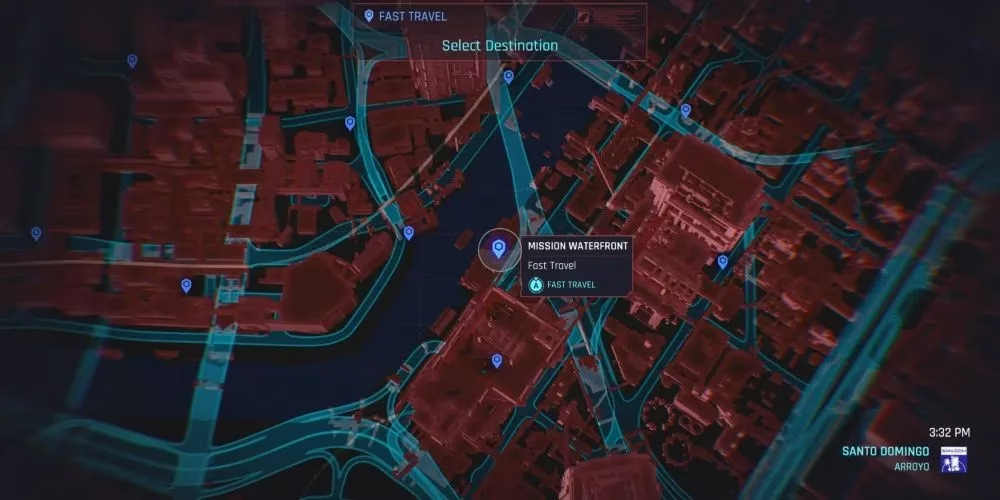
The pilgrimage often begins in Santo Domingo, where the spirit of David Martinez feels closest. Before the chrome and the madness, he was just a good-hearted kid bored enough to loiter at a local ripperdoc’s clinic, sampling braindances that promised cheap thrills. That clinic, once run by the man known simply as Doc, is shuttered by 2077, its door locked and its chairs empty. Yet finding it still feels like uncovering a fossilized moment. Players who scan the Arroyo district can pinpoint the derelict storefront, a silent monument to the ordinary life David traded for a one-way ticket to legend. From there, the trail leads deeper into Arroyo, to Megabuilding 4. The colossal structure looms like a tombstone for a family that never had a chance. David and his mother lived here, and behind the sealed entrance, hidden beside a trash can smeared with the Edgerunners graffiti tag, a braindance waits. Slotting it in triggers a scene from the anime and a side quest, as if the city itself is murmuring, "Remember him."
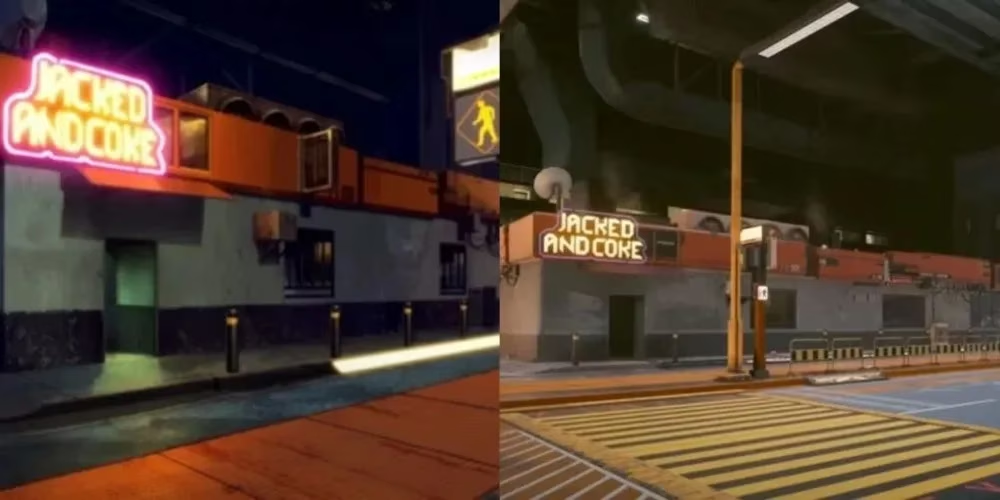
Venturing into Heywood’s Vista Del Rey district, the search shifts from memory to menace. The Jacked and Coke Bar, owned by the Tyger Claws, still pours drinks under the same sign where David’s crew once accepted a dangerous data-retrieval gig. The air here is thick with the residue of bad decisions; every scratched tabletop could be the one where a deal went sour. Nearby, the Turbo Bar in Japantown’s Westbrook district thrums with a more triumphant energy. This is where the Edgerunners danced away the adrenaline after a heist, their laughter bouncing off the garish walls like a ghost signal you can almost tune into. Finding it is simple—just fast-travel to Megabuilding Eight and follow the bass—but standing in that room can make a player feel like an intruder at a party that ended years ago, the strobe lights still flickering for no one.
Then there are the apartments, scattered through Watson like splinters from the crew’s shattered team. In Northside, the brother-sister duo Rebecca and Pilar shared a home that, depending on your progress through the game, may still open its doors to a stranger. The place is a monument to their chaotic bond, a capsule of laughter and bickering frozen in time. Not far away, the netrunner Kiwi’s apartment in Kabuki rises in a tall glass-walled building. Her betrayal still stings fans, but her redemption before flatlining casts a softer light on the space now occupied by someone new. Take the elevator to the 13th floor and you’ll stand in a room that once hummed with her silent, calculating genius—now just another box in the city’s vertical filing cabinet. And across from the Turbo Bar, Lucy’s rooftop remains the most romantic scar of all. Her apartment building is locked, but determined climbers can scale its exterior to reach the ledge where one of the show’s most iconic scenes played out. The view from that height, overlooking the glittering scar tissue of Night City, is a reward that needs no dialogue. It’s a poetry of loss written in neon and smog.
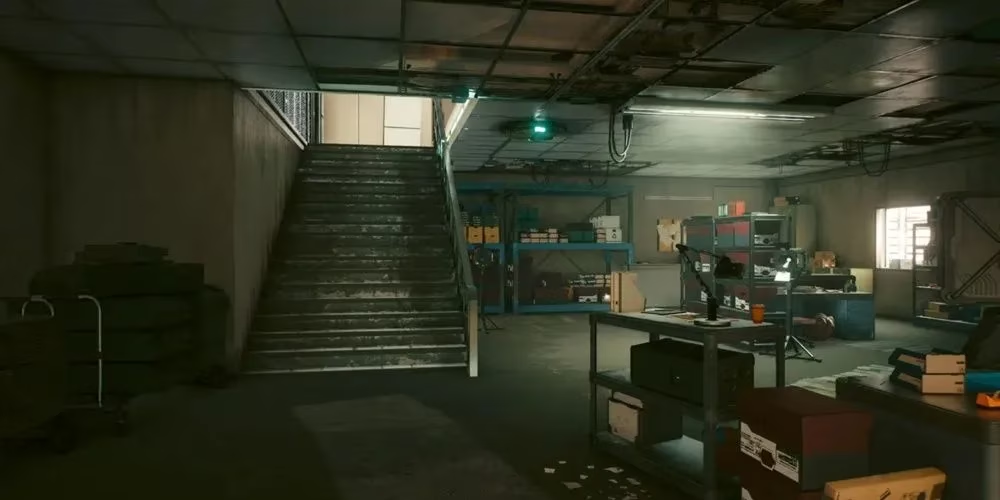
The darker corners of the trail hold their own weight. In Watson’s Northside, the braindance lab once run by the infamous Jimmy Kurosaki still operates under new management. Entering it feels like stepping into a crime scene that’s been hurriedly cleaned—the white walls don’t forget what they’ve witnessed. JK’s collaboration with David’s crew was a marriage of convenience that ended in bullets, and the lab carries that tension like an odor that won’t wash out. Further uptown, at the top of Corpo Plaza, the shotgun Guts waits as a tribute to Rebecca’s explosive spirit. The weapon is a garish, oversized, hot-pink destroyer, and picking it up feels like inheriting a piece of her soul. She was the crew’s untamed id, all chrome and fury, and wielding her gun turns any firefight into a roaring eulogy.
Finally, no pilgrimage ends without a stop at the Afterlife. Rogue’s bar immortalizes Night City legends in liquid form, and after the credits rolled on Edgerunners, a new drink appeared on the menu: the David Martinez. Order it, and the bartender slides over a glass that tastes like cheap ambition and expensive tragedy. Johnny Silverhand has his, Jackie Welles has his, and now David’s name sits among them, a permanent fixture in a club you can only join by dying spectacularly. To drink it is to acknowledge that this city devours everyone it loves, but it also remembers, in its own cruel way. As of 2026, players report that the cocktail still burns exactly as it should—a small, bitter communion with a kid who reached for the moon and got pulled into the void.