A Player's Plea: Why Project Orion Must Go All-In on First-Person
Cyberpunk 2077's first-person view masterfully immerses players in the neon-drenched, overwhelming reality of Night City, a critical design choice that must be preserved for Project Orion to maintain its unparalleled intensity and narrative power.
I remember the first time I stepped into Night City. It was 2024, and I was just another hopeful gonk ready to make my mark. The world… it swallowed me whole. Those towering skyscrapers didn't just loom; they pressed down on me. The neon glare from the ads wasn't just light; it felt like a physical pulse against my optics. That's the magic they nailed, and the magic they absolutely cannot lose. See, that overwhelming, in-your-face feeling? That came from one core, unshakable decision: locking me into V's head. It wasn't just a camera angle; it was a cage for my soul, and honestly? I loved every second of it.
Now, fast forward to 2026. The whispers about Project Orion are getting louder, and my biggest fear is that they'll listen to the noise and water down that vision. I get it, I really do. Some folks felt forced into that first-person view. It's a big ask, especially when most RPGs—looking at you, Skyrim and Fallout—hand you a toggle switch right from the start. Want to admire your fancy new armor from the back? Go for it. But here's the thing about freedom: sometimes it costs you the immersion. If you give people an easy way out, they'll take it. And in doing so, they'd miss the whole damn point of what CD Projekt Red built.
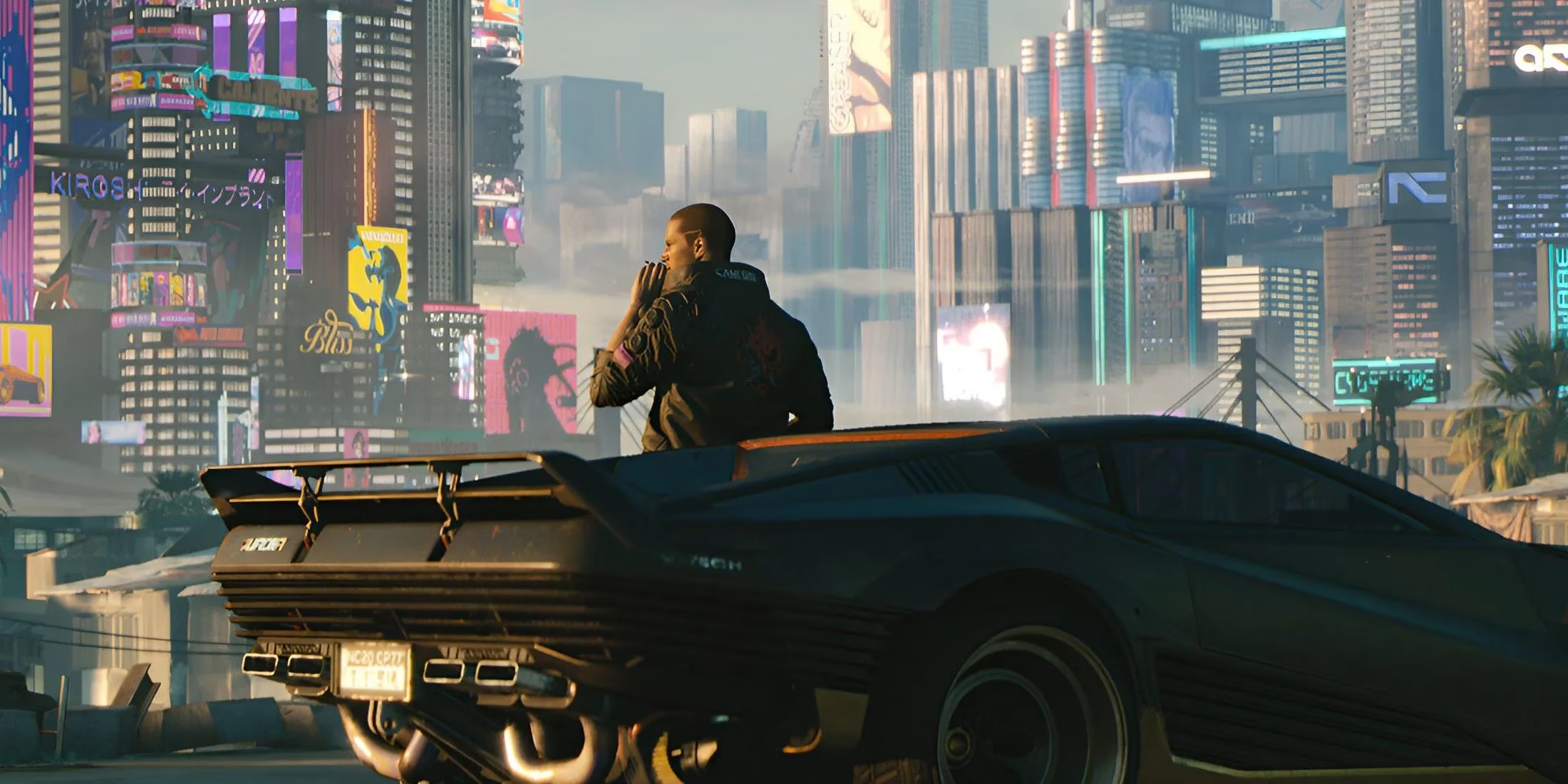
When I'm walking those rain-slicked streets, scanning the crowd for a fixer or a threat, that first-person view isn't just a perspective—it's my reality. The discussions with Johnny? Face-to-face, no cinematic cutaway. I'm not watching a conversation; I'm in it. The tension in a firefight? It's primal. You don't get that same heart-in-your-throat feeling when you're calmly orbiting your character from a safe distance. Forcing that intimacy was a bold, brilliant move. And with where gaming is headed—VR, AR, the whole metaverse shebang—doubling down on a true, unbroken first-person experience isn't just a design choice; it's a statement. It's time to stop playing it safe.
Okay, okay. I hear you. The biggest gripe is always the same: "But I spent an hour in character creation! I want to see my V!" And hey, that's fair. You've crafted a masterpiece from synth-leather jackets to chromed-out arms, and you wanna show it off. But Cyberpunk 2077 already had a slick workaround with Photo Mode. You could pause, frame the perfect shot, admire your handiwork. For Project Orion, they don't need to backtrack; they need to push forward.
Imagine a Night City that lets you see your reflection everywhere:
-
Polished chrome walls in corpo plazas.
-
Grimy, cracked mirrors in the bathrooms of Afterlife.
-
The glossy, reflective surface of your Rayfield Caliburn's hood.
-
Puddles on the asphalt after a rare rain, showing a distorted, neon-streaked version of you.
These aren't just visual flourishes; they're intentional moments of self-reflection (pun intended) that preserve the first-person immersion while giving you those coveted glimpses of your style. It makes the world feel more real and reactive.
Now, let's talk about the elephant in the room: driving. Alright, I'll admit it. I switched to third-person in my Quadra Type-66 more often than not. Why? Because first-person driving could feel… clunky. The spatial awareness just wasn't there. If Project Orion is going to commit to a fully first-person experience, it needs to fix this, not just remove the alternative. We need a driving experience that feels as immersive and intuitive as being on foot.
Here’s my wishlist for first-person driving in Night City 2.0:
| Feature | Why It Matters |
|---|---|
| Expanded AR Windshield HUD | Project navigation, threat highlights, and vehicle diagnostics directly onto the glass. Make it feel like a real cybernetic interface. |
| Dynamic Side & Rear-View Mirrors | No more blind spots! These should be fully functional, maybe even with zoom/enhance functions. |
| Holographic 360-Degree Radar | A subtle, sphere-like overlay that paints nearby objects and vehicles in real-time. Think of it like a spider-sense for your car. |
| Tactile Feedback Steering | The wheel should fight you on tight turns, rumble over bad roads—connect you to the road. |
They could take a page from GTA V's driving polish, but weld it to a futuristic chassis. We're in 2077! My car shouldn't feel like it's from 2023. Give me holographic displays that eliminate blind spots, an AI co-pilot that warns me of impending collisions… make me feel like a hyper-skilled Night City driver, not just a tourist behind the wheel.
And this isn't just about gameplay mechanics. Going fully first-person speaks to the soul of the Cyberpunk genre itself. The central themes are identity, augmentation, and the subjective nature of reality. When I'm locked behind my character's eyes, every choice about my cyberware, my dialogue, my morality—it all feels more personal. It's my identity on the line. The world's corruption isn't something I observe; it's something I viscerally experience. That emotional depth is… well, it's everything.
So, to the team working on Project Orion, I say this: be brave again. Some gamers will grumble about the lost flexibility. But the payoff—a deeper, richer, more atmospheric, and emotionally resonant journey through whatever hellscape of tomorrow you build for us—will be worth it. Don't give us an out. Keep us in the driver's seat of our own consciousness. Make us live it. That's the legacy of Night City, and that's the future I'm betting on.