Cyberpunk 2077: From Digital Disaster to Redemption Royale
Cyberpunk 2077's remarkable redemption, from a catastrophic launch to a modern masterpiece, is a compelling story of developer perseverance and transformation. The game's core brilliance, once trapped in a broken shell, was fully unlocked through relentless updates and the game-changing Phantom Liberty expansion.
In the annals of video game history, few stories are as dramatic as the rollercoaster ride of Cyberpunk 2077. From a launch so catastrophic it sparked investigations and mass refunds, to a modern masterpiece lauded with "Overwhelmingly Positive" reviews, this is a tale of a studio that stared into the digital abyss and clawed its way back with sheer determination. It's a comeback story that makes a phoenix rising from the ashes look like a casual Tuesday.
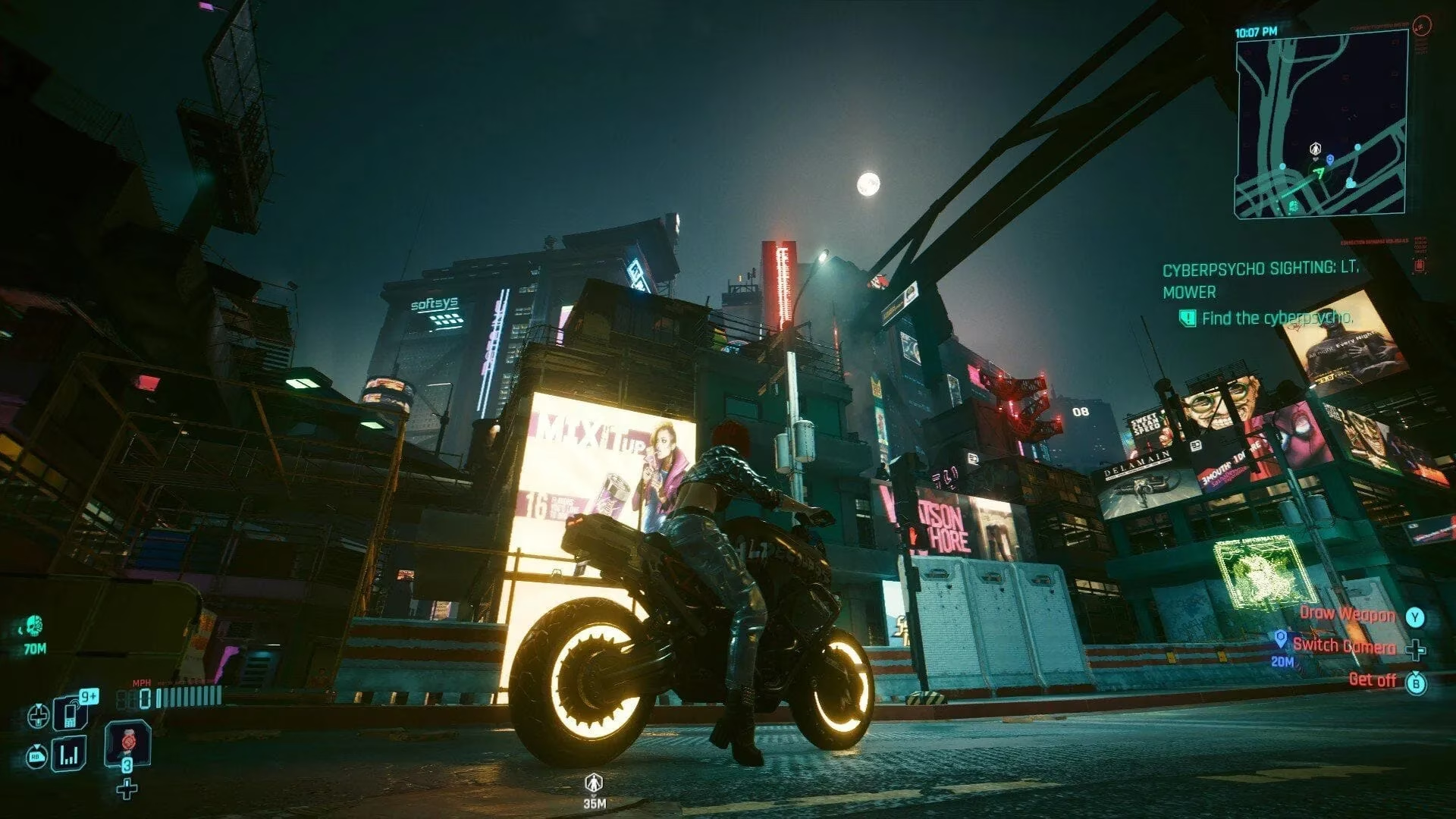
Let's rewind the braindance. The initial release wasn't just buggy; it was a symphony of glitches performed by an orchestra of broken promises on last-gen consoles. Players on PlayStation 4 and Xbox One weren't just getting a subpar experience—they were witnessing a digital crime scene where NPCs would T-pose into eternity and cars would fall from the sky like metallic rain. The hype train, which had been barreling down the tracks for years, didn't just derail; it spectacularly exploded, taking CD Projekt Red's sterling reputation with it. Yet, beneath the janky surface and missing police AI, a core truth flickered like a neon sign in a rainstorm: this was never a bad game. It was a brilliant game trapped in a horrifically broken shell.
What followed was a masterclass in developer accountability. CD Projekt Red didn't issue a few patches and slink away. They went full cyberware upgrade on their own creation. They launched into a years-long crusade of updates, overhauls, and community engagement. The journey to version 2.0 was less of a patch cycle and more of a complete system rebuild, addressing everything from the wonky AI and driving physics to the entire skill and perk system. It was the video game equivalent of rebuilding a car's engine while it was still speeding down the highway—a terrifying and impressive feat.
The real game-changer, the moment the tide truly turned, arrived in 2026 with the Phantom Liberty expansion. This wasn't just DLC; it was a statement. Set in the volatile new district of Dogtown, it delivered a spy-thriller narrative with branching choices that would make a Netrunner's head spin, starring the legendary Idris Elba as Solomon Reed. Phantom Liberty didn't just add content; it showcased the game Cyberpunk 2077 was always meant to be: dense, reactive, and narratively breathtaking. It was the final, polished piece of the puzzle, proving that the original vision wasn't a mirage.
So, what exactly did the fixes and the expansion unlock? Let's break down the transformation:
-
The World of Night City: Once a pretty backdrop prone to melting, it became a living, breathing character. The NPCs gained purpose, the traffic flowed (mostly) logically, and the city's verticality became explorable and meaningful.
-
The Narrative Core: From the start, the heart of V's story—their fight for survival, their bond with Johnny Silverhand, and the poignant, varied endings—was top-tier CD Projekt Red storytelling. The polish simply let that heart beat without interruption.
-
Gameplay Revolution: The 2.0 update completely overhauled combat, making builds wildly diverse and satisfying. Want to be a silent hacker, a shotgun-toting berserker, or a katana-wielding cyborg? The choice finally felt impactful and fun.
This redemption arc places Cyberpunk 2077 in an elite club of gaming turnarounds, sitting right next to Hello Games' No Man's Sky. It's a testament to a simple, often forgotten idea in the AAA space: listening to your players and caring for your product after launch matters. In an era where games are often abandoned or sequeled, CD Projekt Red's commitment was a rare and valuable artifact.
The "Overwhelmingly Positive" rating on Steam in 2026 isn't just about forgiven sins. It's an aggregate of thousands of players experiencing the game as it was intended: a sprawling, cyber-noir RPG with unparalleled style and substance. It's a rating earned through relentless work, a fantastic expansion, and the undeniable quality that was buried under the launch-day rubble. The game that was once a meme for its failures is now a benchmark for narrative depth and open-world immersion. CD Projekt Red didn't just fix a game; they completed a vision, and in doing so, crafted one of the most remarkable comeback stories in entertainment history. Wake the hell up, Samurai. They've got a city to burn... and they finally did it right.