Diving Into Memory: The Story Behind Judy's Pyramid Song in Cyberpunk 2077
Pyramid Song quest in Cyberpunk 2077 offers emotional depth as V and Judy explore Laguna Bend's sunken memories together.
In the sprawling neon labyrinth of Night City, few moments cut through the chrome and chaos like a quiet invitation from a friend. For V, the mercenary whose very soul hung in precarious balance, an unexpected call from Judy Alvarez in 2026 became the doorway to something far deeper than eddies of eddies. The badlands stretched out under a bruised sky as V made their way to the dam, a fast-travel marker now humming with a new significance. Judy waited there, her silhouette softened by the fading light, ready to share a piece of her past that had long been submerged.
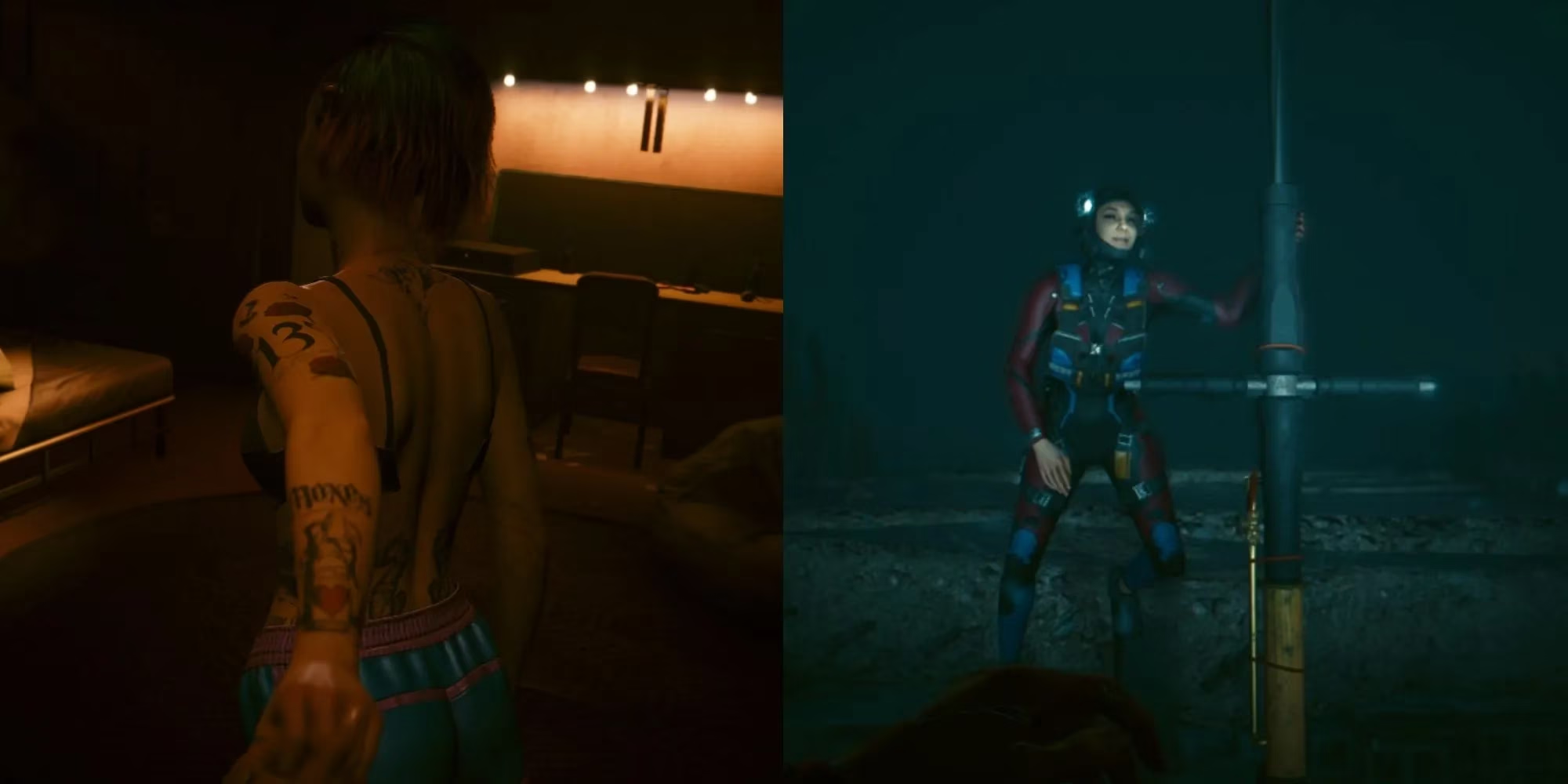
The quest known as Pyramid Song unlocked only after the 'Pisces' mission, a narrative fork that tested loyalties and left emotional fissures. Judy’s message was simple: meet her near Laguna Bend, a drowned town whose spires still pierced the dark waters like the ribs of a forgotten beast. For V, it was an opportunity to escape the relentless grind of gigs and corporate warfare. For Judy, it was a pilgrimage back to a childhood that existed only in fractured memories now preserved beneath a reservoir.
Arriving at the terrace overlooking the reservoir, V found Judy staring at the expanse of water. She handed over scuba gear without fanfare, her usual sharp wit tempered by a rare vulnerability. As darkness swallowed the last rays of the sun, the two descended into the cold embrace of the lake. The world above disappeared; only the muffled hum of their breathing apparatus and the gentle beams of their flashlights remained.
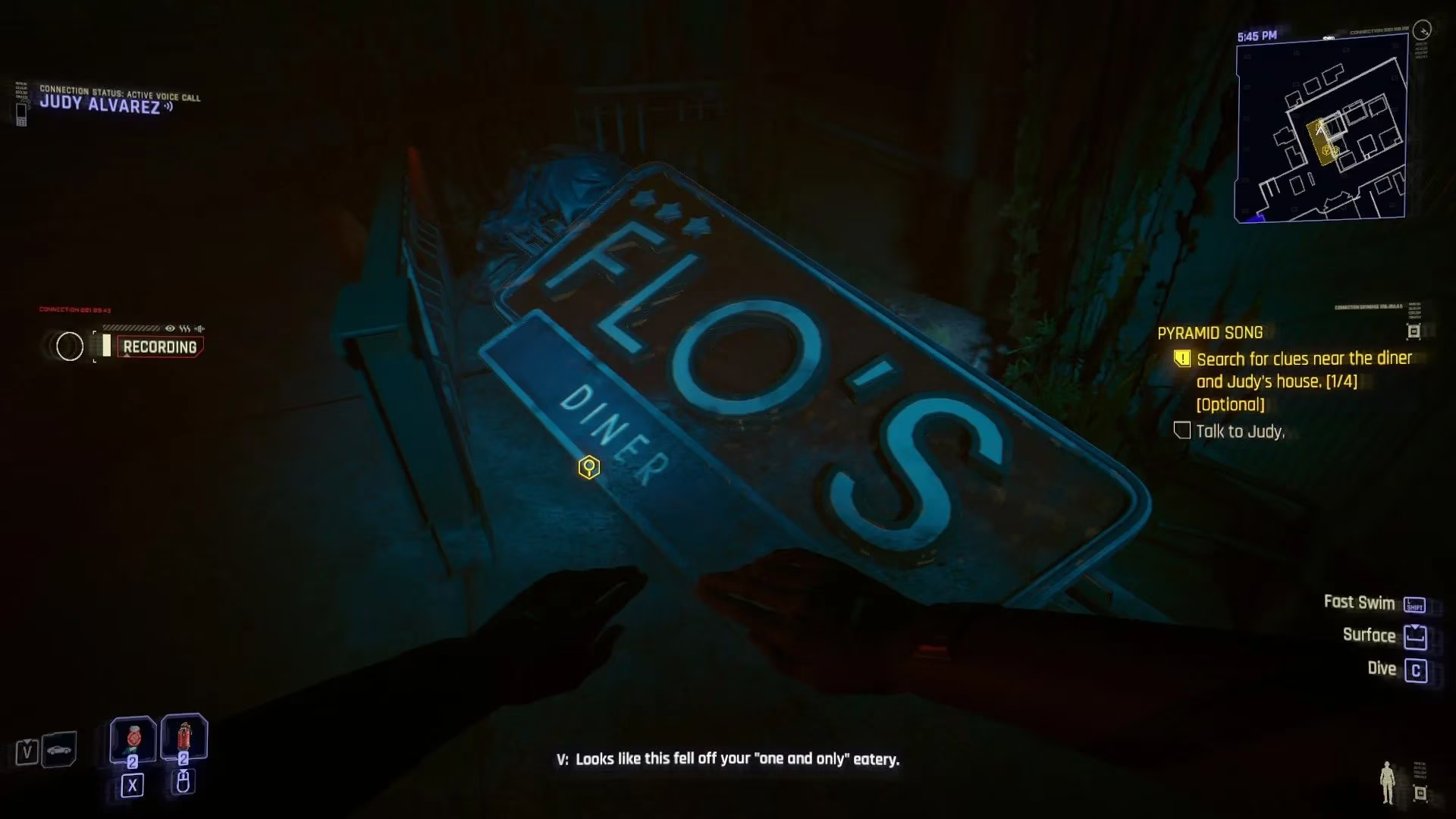
Swimming became a meditation. Judy guided V past the skeletal remains of a diner, and it was here that the first shard of memory surfaced. On the silt-covered ground, a broken signage bearing the name “Flo’s” lay half-buried. V inspected the relic, and Judy’s voice trembled over the comms, recounting afternoons spent sharing milkshakes with her grandmother. Not far from that, a framed photo glinted among the debris, a snapshot of a family that once brimmed with life. Each discovery peeled back another layer of Judy’s guarded heart. An old camera tangled in seaweed, a hockey stick propped against the porch of a sunken house, an umbrella near rusted gas pumps—these objects were not just set dressing; they were keys to a joy that had long since turned bittersweet.
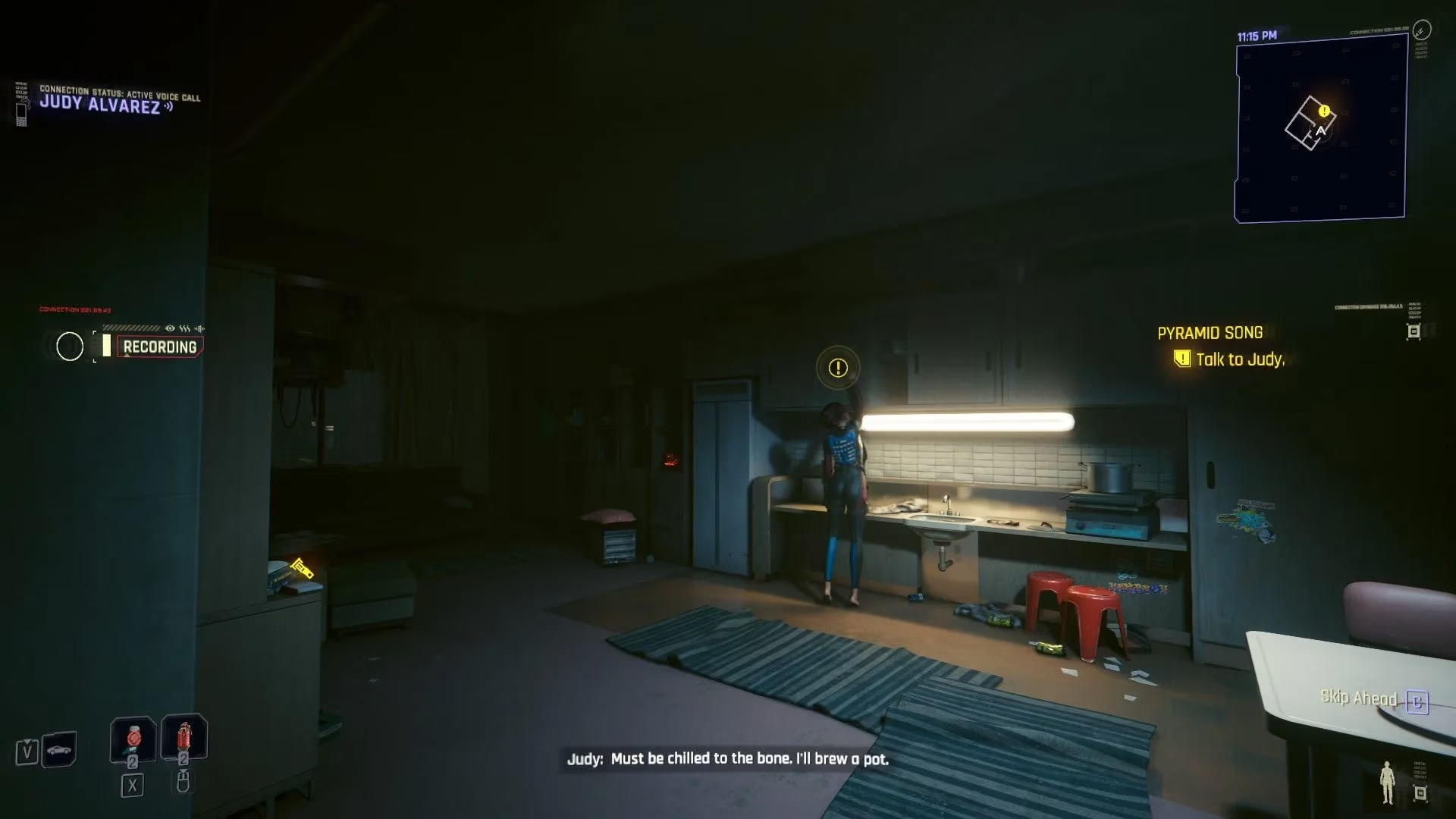
As V navigated the underwater maze, the story of Laguna Bend unfolded. Judy’s hometown had been intentionally flooded during a dam project decades earlier, a casualty of corporate expansion that erased whole communities. She spoke of her grandparents and the simpler life before the city’s tendrils ever reached her. The environment itself whispered forgotten tales: a broken-down car beside the gas station hinted at hasty departures; an old doll wedged inside a barrel near the pumps revealed a child’s last play. V collected these echoes, knowing they mattered more than any stack of eurodollars.
Eventually, the pair reached the grand structure that had once been the town’s church. Weary from swimming but pulled by an invisible current of narrative, V heeded Judy’s direction toward a gaping hole in the right-side wall. No slow navigation around the left was necessary; the shortcut led straight inside, where filtered moon light streamed through collapsed rafters. Judy emerged from the roof, and the sanctuary enveloped them in a profound stillness.
Inside the church, no combat erupted, no hacking mini-game ticked. Instead, a cinematic sequence unfolded. Judy stood before the altar—now a pedestal for silt and sorrow—and shared her deepest pain. The underwater cathedral became a confessional where faith was no longer about gods, but about trust between two wounded souls. When the moment came, Judy’s air tank malfunctioned, and V felt the panic ripple through the water. In the chaos, Johnny Silverhand’s snarky reminder of mortality was a distant noise. V freed Judy and dragged her to the surface, where the cold night air never felt more alive.
Later, in the dim light of the bathroom at the lakeside house where they dried off, the emotional tide turned intimate. With Judy still trembling from the near-drowning, V had a window to offer comfort that could bridge friendship into romance. The game granted a delicate choice: reach out and solidify a relationship, or treat the encounter as a fleeting moment. For those who chose to share the night, a tender scene unfolded, followed by the inevitable morning-after conversation. Judy, ever direct, asked what they meant to each other. That single dialogue locked in a partnership that would ripple through the remaining chapters of V’s life.
The rewards of Pyramid Song were not measured in raw power alone, but they held sentimental weight. V’s apartment gained a diving equipment box and—if romance blossomed—a wall photo of Laguna Bend. These trinkets served as quiet reminders of a night spent not as a mercenary, but as a confidant. Furthermore, a deepened bond with Judy transformed her apartment into a trove of personal gifts. Among them lay the Mox Shotgun, a sleek and brutal instrument that carried the spirit of her former gang, and a trio of MaxTac tactical gear: a helmet with multifunction infovisor, an armor-weave jacket, and heavy-duty cargo pants. Practical, yes, but each piece whispered of Judy’s past and her fight for autonomy.
Pyramid Song stood apart from the rest of Cyberpunk 2077’s quest roster. It refused to reward speed or firepower. It demanded patience, attention, and a willingness to witness someone else’s ruins. By 2026, the mission had become a touchstone for players seeking meaning beneath the chrome. It transformed a side quest into a soulful expedition, proving that in a world obsessed with upgrading oneself, the most human upgrades came through connection and shared memory.
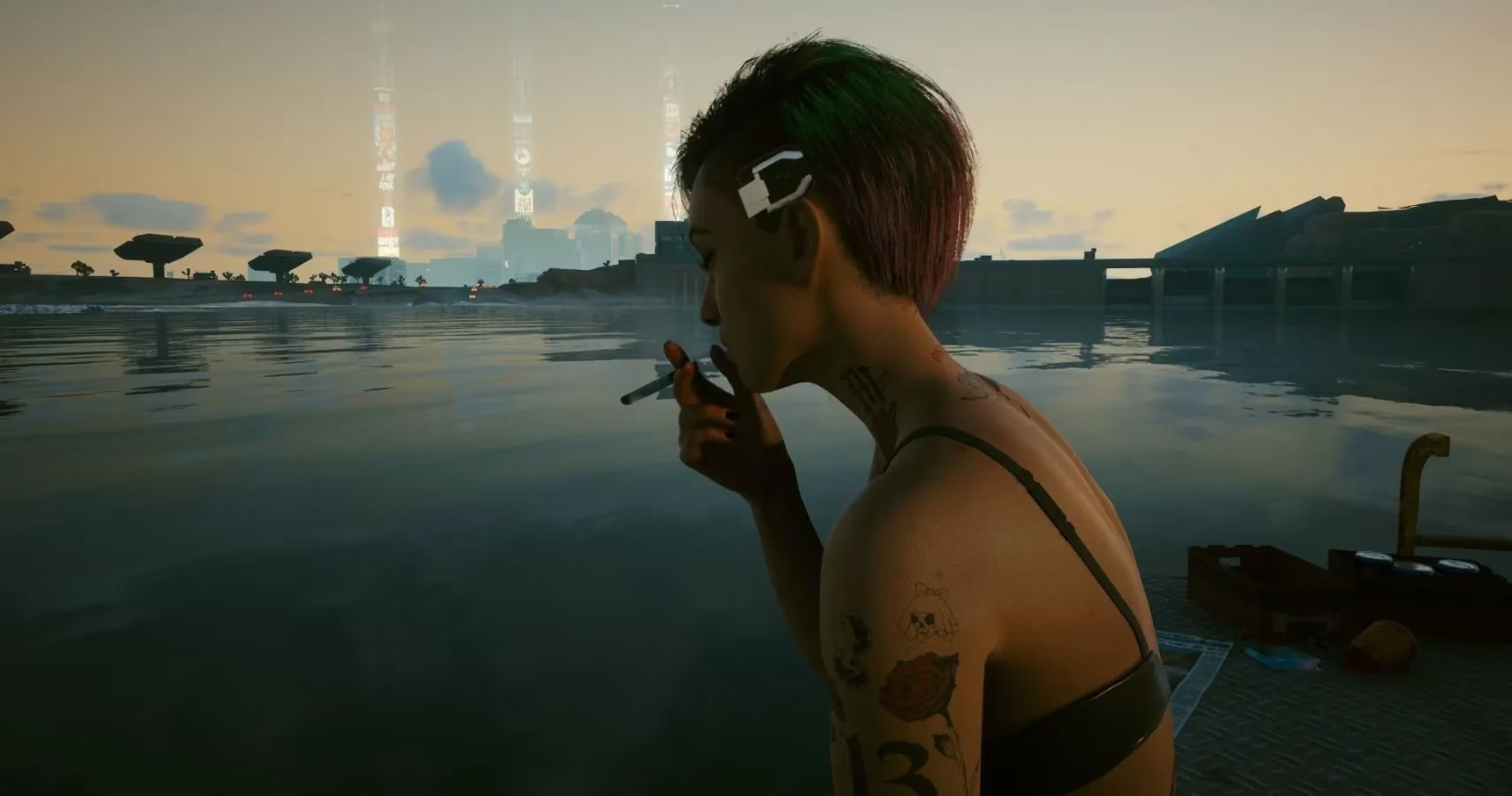
As the game’s narrative threads wove toward their end, Pyramid Song lingered. It was more than a walkthrough checkpoint; it was an emotional anchor. Those who embarked on that scuba trip with Judy Alvarez discovered that the deepest parts of Night City weren’t found in corporate vaults or cyberspace servers, but in the flooded remnants of a girl’s childhood, waiting for someone brave enough to dive in and listen.