From Rust to Gold: Cyberpunk 2077's Redemption and a Bittersweet Farewell
Cyberpunk 2077 and Phantom Liberty deliver a revitalized RPG experience, transforming Night City from glitch-ridden chaos to immersive brilliance.
I remember standing at the precipice of Night City in late 2020, my console wheezing like a diver surfacing from deep water, the promised neon utopia crumbling into a slideshow of glitches. That launch was a raw, unpolished blade—dull yet dangerous—cutting through the trust that CD Projekt Red had built with The Witcher 3. I watched digital storefronts yank the game from their shelves, felt the collective groan of millions who had dreamed of a living, breathing megalopolis. At the time, I thought this would be the gravestone epitaph for one of the most overhyped releases in memory. But like a blacksmith reforging a shattered sword, the studio did something few do: it refused to toss the metal into the scrap heap.
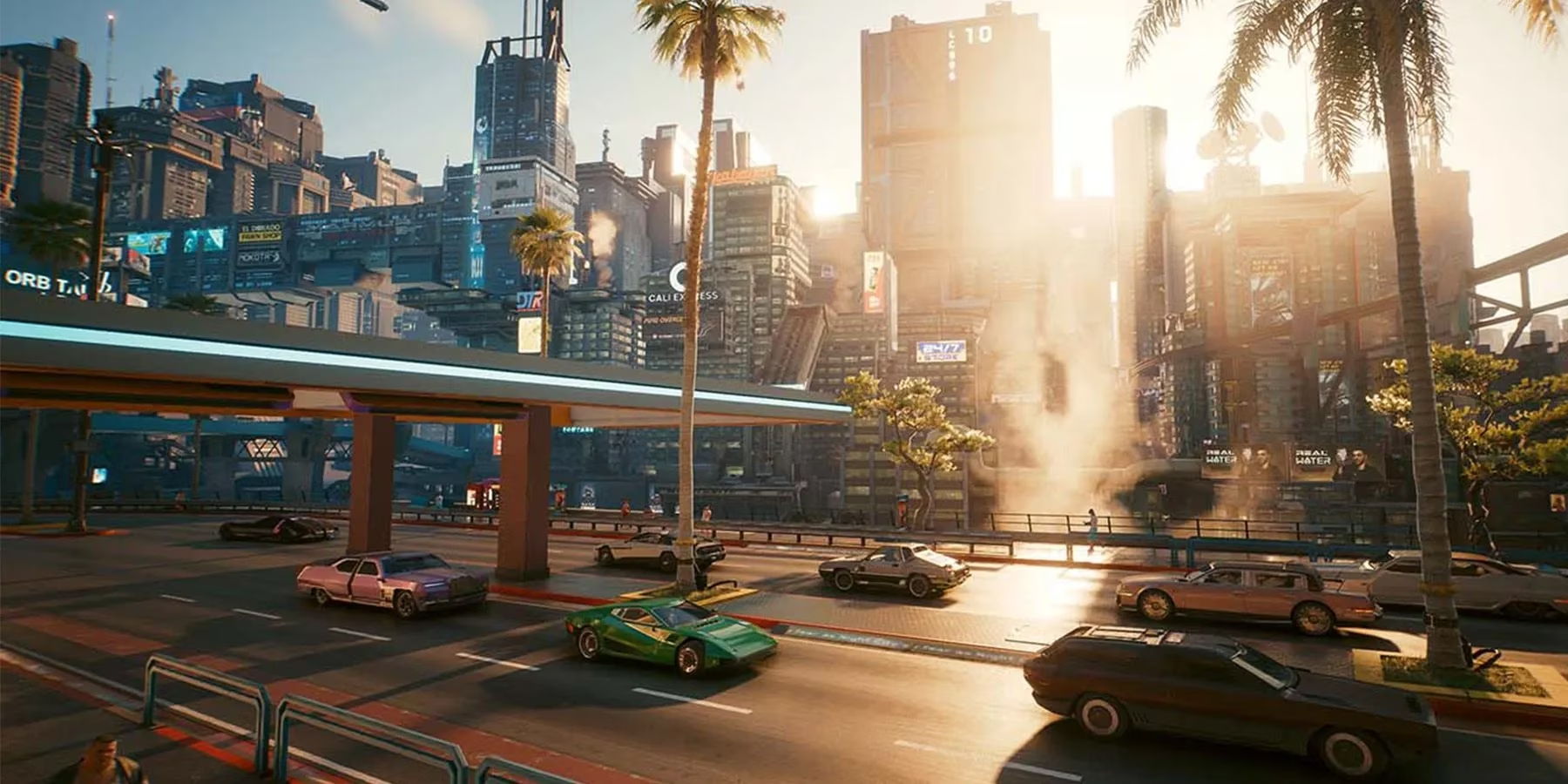
The transformation didn’t happen overnight. It was a slow, methodical alchemy—one patch became the bellows, the next was the hammer, and eventually, the 2.0 update ignited the forge with a heat intense enough to reshape the entire RPG skeleton. By 2023, the game felt less like a patched corpse and more like a phoenix built from salvaged fire. Police systems were overhauled, perks tree branched into wildly creative avenues, and vehicle combat made the streets pulse with a fresh lethality. But the real catalyst, the philosopher’s stone in this transmutation, was Phantom Liberty. That expansion didn’t just add a district; it breathed a new, paranoid-kissed soul into the machine. I stepped into Dogtown, a walled-off abscess of a district, as a mercenary caught between spy thriller tension and cybernetic tragedy, and I finally felt the promise that had been fractured three years earlier.
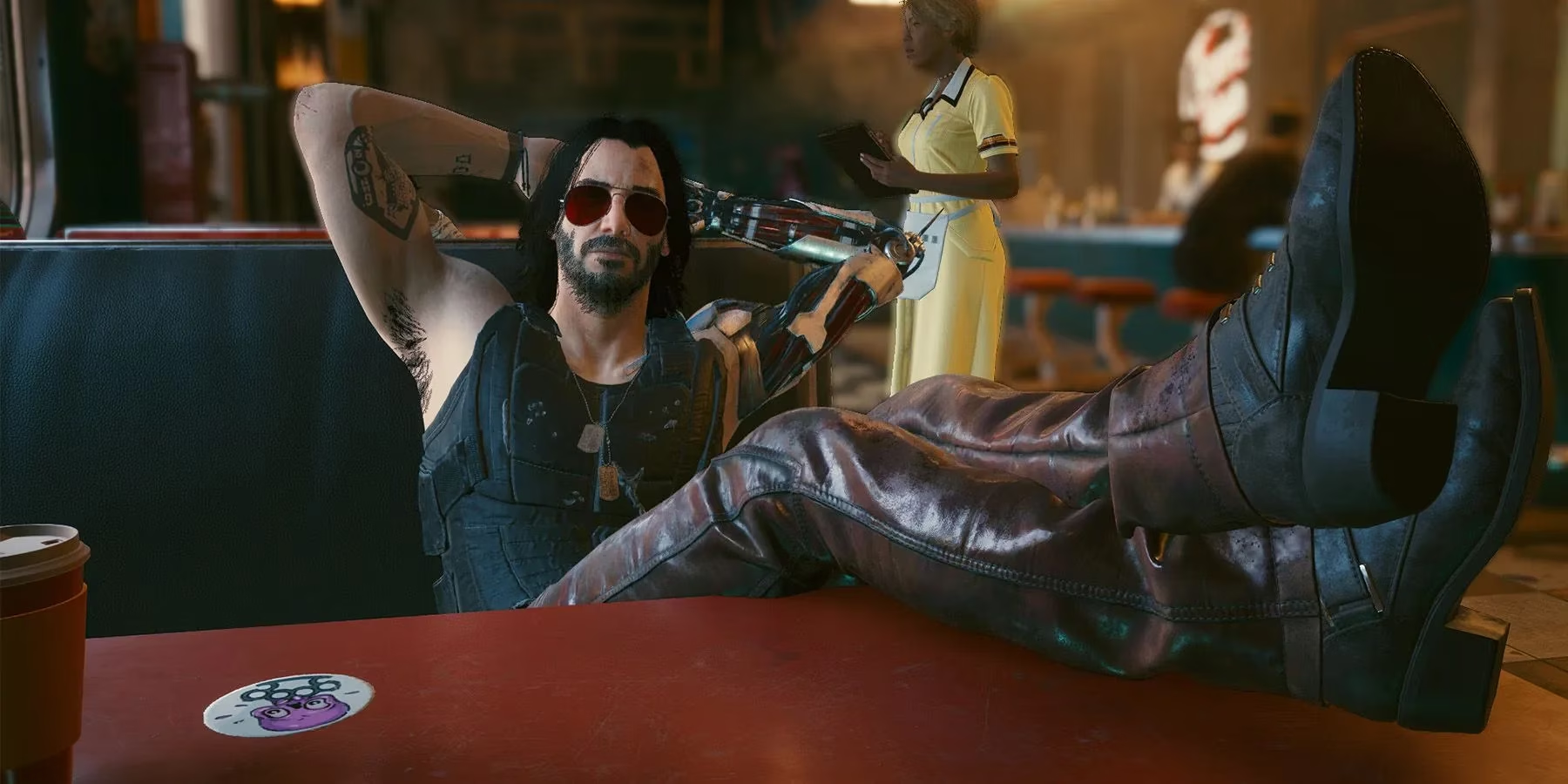
Playing Phantom Liberty in 2026, long after its initial release, I’ve come to see it as an adrenaline shot directly into a heart that had been fibrillating. The storytelling was a lightning strike compared to the base game’s steady rain—Idris Elba’s Solomon Reed and the enigmatic Songbird wove a narrative so tight it could garrote you. The Relic upgrades, however, often felt like a doctor prescribing morphine when the patient needs surgery; they were powerful but frequently at odds with V’s deteriorating condition. Yet, even with that narrative friction, the DLC elevated Cyberpunk 2077 into a throne room of modern RPGs. For me, the irony is thick: the very expansion that perfected the experience also drew the final curtain. CD Projekt Red confirmed that Phantom Liberty would be the only major content drop, turning the game into a finished symphony rather than an endless playlist. It’s a rare, almost mournful beauty—like savoring the last sip of an aged whiskey, knowing the barrel is now empty.
There’s a peculiar gravitas to leaving a game at its absolute peak. Many franchises dribble out expansions until the community feels bloated and indifferent, but Cyberpunk 2077 chose to exit stage left while the applause was still thunderous. This decision feels like a tightrope walker dismounting at the highest point of the wire, without a wobble. In 2026, I can still boot up Night City and find players filling the streets, not because they are waiting for more, but because what exists is finally complete. The modding community, a beautiful swarm of digital street artists, has further painted over the remaining rust spots, but the core structure stands as CDPR’s final apology note—one written in neon ink and paid for with years of sweat.
Looking forward, the studio has shifted its gaze to a new Witcher saga and a sequel to Cyberpunk 2077, currently codenamed Project Orion. I can only hope they carry the lessons of this redemption arc like a scar that aches before a storm. The implosion of 2020 was a crucible, and the alloy that emerged is stronger because of the heat. As a gamer who has wandered through countless broken launches, I find this journey eerily hopeful. Cyberpunk 2077 is proof that a ship can be rebuilt while still at sea, even if it takes swallowing a thousand gallons of saltwater first. And while I’m eager to see what new worlds CDPR will craft, I will miss the rain-slicked alleys of Night City, now standing as a monument not to failure, but to the stubborn, improbable art of resurrection.
Cyberpunk 2077: Phantom Liberty remains available on PC, PS5, and Xbox Series X/S, and in 2026 it endures as a recommended rite of passage for any lover of dark, choice-driven narratives.