I Almost Left Night City Without The Chimera Core
After Cyberpunk 2077 Phantom Liberty Chimera boss fight, collect The Chimera's core behind the fallen boss's rear—keep it for quests.
Listen, I've been through some messy gigs in Night City, but The Chimera fight in Cyberpunk 2077: Phantom Liberty still makes my palms sweat. It's 2026, and after every update CD Projekt Red has pushed, that walking slab of armor still hasn't learned to die quietly. I ducked laser beams, swatted drones, and dumped more rounds into its glowing weak spots than I care to count. When the metal beast finally collapsed, I genuinely forgot to breathe.
Then a little optional objective popped up: Collect The Chimera's core.
I almost ignored it. Don't get me wrong—I love loot. But after a ten-minute bullet buffet, my first instinct was to sprint for daylight. That would have been a mistake.
The Walking Tank's Last Surprise
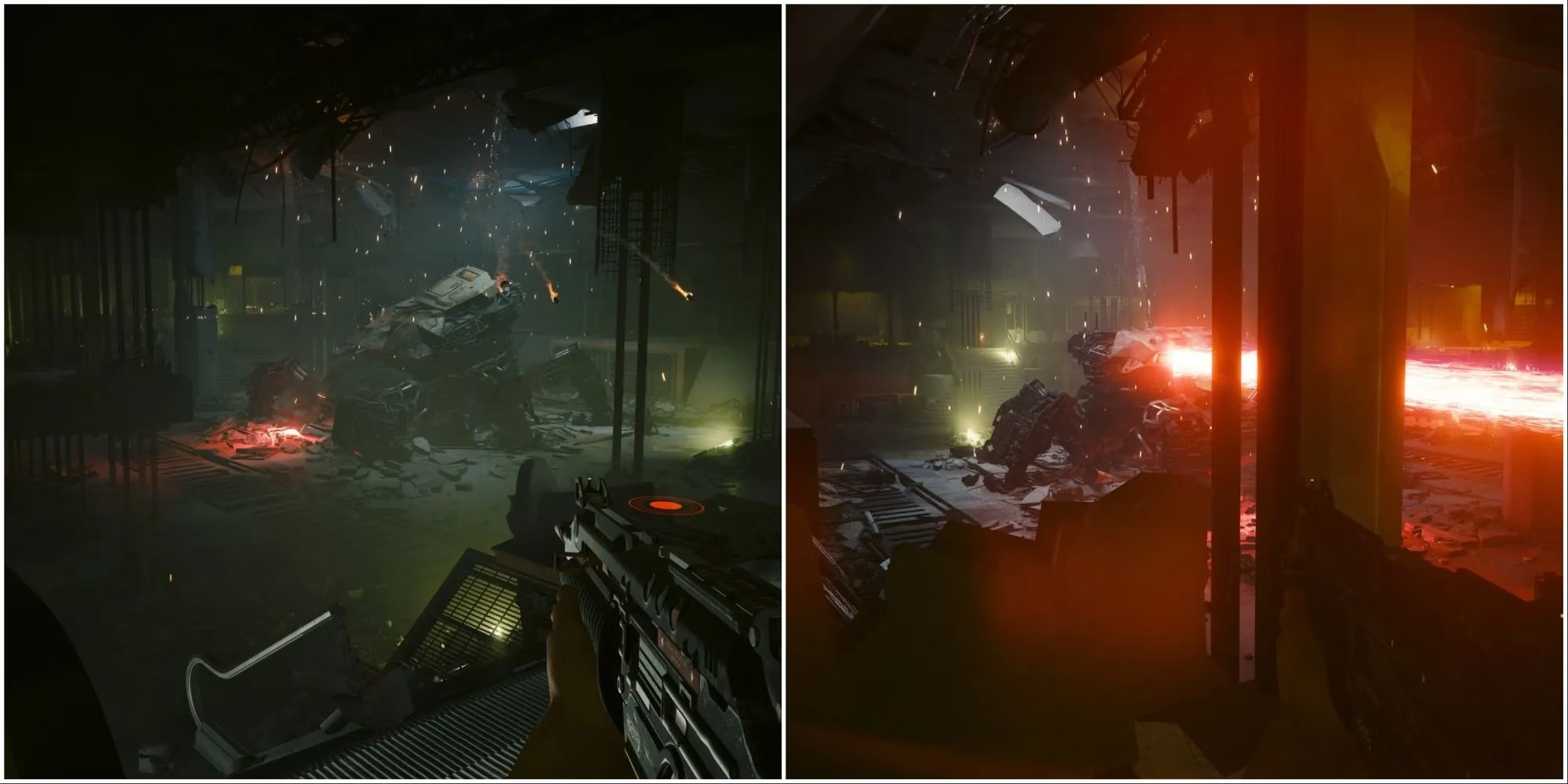
The boss arena looked like a warzone had a hangover. Smoke, sparking cables, chunks of concrete everywhere. My logical brain said, 'The core is probably in the Chimera.' So I climbed around the burning hulk like an idiot for a solid five minutes. My scanner kept chirping, but the loot icon refused to line up.
Here's a little wisdom from the streets: the obvious answer is usually a trap.
The Chimera's core doesn't sit inside the main chassis. It drops around the backside of the boss, near its rear. I found it after I stopped trying to be clever and just walked around the wreck. It had rolled a bit, partially hidden by debris, which is exactly the kind of petty behavior I'd expect from a robot that spent ten minutes trying to turn me into paste.
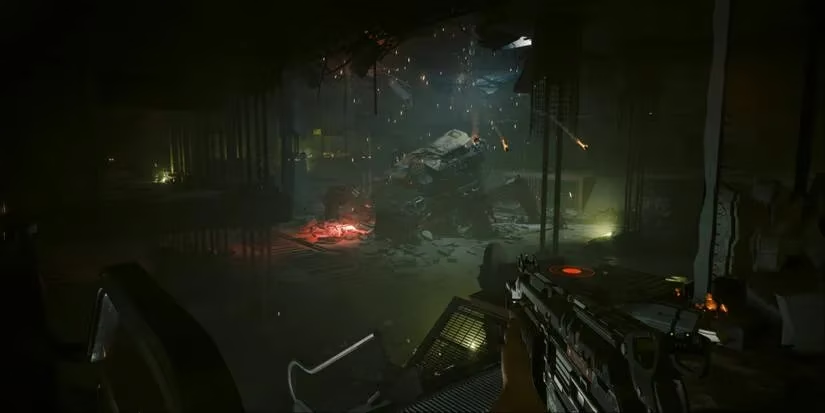
Let me paint the picture: the core is small, roundish, and smoking like it just heard bad news. It looks barely functional, but it still pulses with that angry orange glow. If the boss falls near a wall or pile of rubble, the core can get covered or roll away. Check around the rump area before you leave. I nearly left it behind, and that would have been a real pain in the chrome later.
What to Do With the Core
Once you grab it, the game doesn't shove instructions in your face. You're standing in an underground section, covered in dust, holding what looks like a heart ripped out of a very angry machine. So what now?
| Option | What I'd Do |
|---|---|
| Sell it | Only if you're desperate for eddies. It's worth a decent chunk of change. |
| Keep it | Better long-term play. It may tie into later objectives, and holding onto it costs you nothing except inventory space. |
| Forget it | Don't. Just don't. |
If you're broke and need wheels or cyberware, I get it. The core can be sold for some quick cash. But in 2026, after more people have dug through Phantom Liberty, the consensus is clear: this thing is more valuable as a quest object than as scrap. Unless your wallet is making dial-up noises, hold onto it.
A Few Hard-Earned Tips
💡 Don't tunnel vision the boss. The Chimera's arena is packed with environmental hazards. Clear drones first or they'll farm your health bar.
💡 Mind your positioning. The boss likes to reposition, and if you're too close to a wall, the core can get wedged somewhere annoying.
💡 Stop and breathe after the kill. The optional objective appears immediately, but the area is safe enough to search. No need to panic-run.
💡 Scan before you leave. The core might not show up right away if debris is covering the area. Walk around slowly, check the back, and let your optics do their thing.
Why I'll Never Skip This Again
Let's be real: after a fight that long, all I wanted was a shower and a long drive through Night City with the radio up. But grabbing The Chimera's core took me less than a minute once I knew where to look. That one minute saved me from a much longer headache down the road. If you're about to face The Chimera, or if you're already standing in the wreckage wondering where the loot went, do yourself a favor: circle around the backside, look near the rear, and pick up the smoking little ball of regret.
Your future self will thank you.
As detailed in Game Developer, optional pickups like Phantom Liberty’s Chimera core are a classic example of “post-boss clarity” design: after a high-intensity encounter, the game deliberately adds a low-pressure scavenger beat to slow players down, reward spatial awareness, and reinforce the arena as a readable space rather than a one-and-done shooting gallery—exactly why circling the wreck and scanning the rear debris field feels like part of the intended cadence.