Night City’s Hollow Bustle: Why I’m Still Waiting for a Proper Crowd Surge in 2026
Cyberpunk 2077's sparse NPC crowds and empty streets still break immersion, even after the Phantom Liberty expansion.
I still remember the first time I booted up Cyberpunk 2077 back in 2020. The neon-soaked skyline, the towering megabuildings, the promise of a living, breathing megalopolis – it all hit me like a chromed-up freight train. I was ready to dive headfirst into Night City’s chaos, expecting sidewalks so packed I’d have to shoulder-check corpo drones just to cross the street. But honestly? The actual on-the-ground vibe felt more like a city on the verge of a lockdown than the urban jungle the trailers sold me. Even now in 2026, after the massive 2.0 overhaul and the Phantom Liberty expansion, that hollow feeling still creeps in, leaving me hungry for the sequel to finally deliver the genuine sardine-can crowds we’ve been pining for.
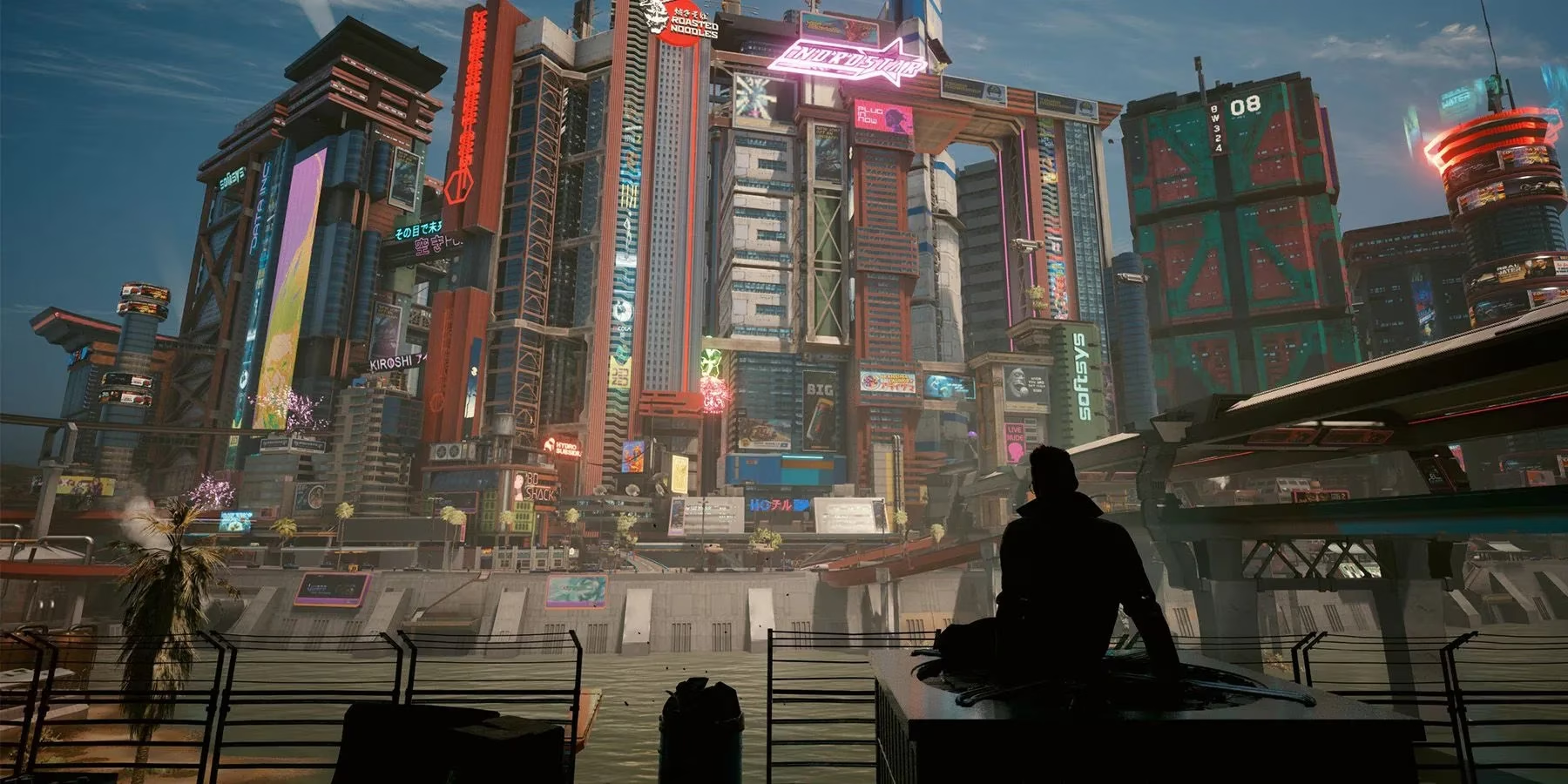
Let’s get one thing straight: CD Projekt Red crafted an absolute banger of an open world. The scale is bonkers – skyscrapers stretch into the smoggy heavens, and each district oozes its own flavor. The art team knocked it out of the park, no doubt about it. Yet when you zoom down to street level, the cracks start showing. A couple of cars roll by, maybe a handful of NPCs shuffle past a noodle stand, and then you hit a stretch of road so barren you could host a street race without closing a single lane. It’s a real takes-you-out-of-the-moment situation. I want to feel like a tiny cog in a colossal machine, not the only soul wandering a post-crisis zone. Phantom Liberty gave us Dogtown, a cramped, walled-off area that honestly feels a smidge more alive than much of the base game. Packed markets, narrow alleys – there’s a heartbeat there. But step back into central Night City, and the drumbeat fades into a faint tap.
The immersion hit is probably the biggest bummer. When I’m roleplaying V, a merc trying to make a name in a cutthroat city, I want the world to push back. Push through a crowd that doesn’t just phase through me because their AI is on autopilot. Get stuck in bumper-to-bumper traffic that actually tests my patience instead of a highway with three cars politely waving each other on. Games like Marvel’s Spider-Man and Grand Theft Auto V nailed this years ago. In Midtown Manhattan or Los Santos, the streets feel like arteries pumping with life. You can almost smell the exhaust fumes and hear the cacophony of a thousand conversations. Night City, for all its visual glory, often gives me the eerie silence of a movie set after the director yells “cut.” It’s a shame because the lore screams overpopulation and chaos, but the pavement tells a different story.
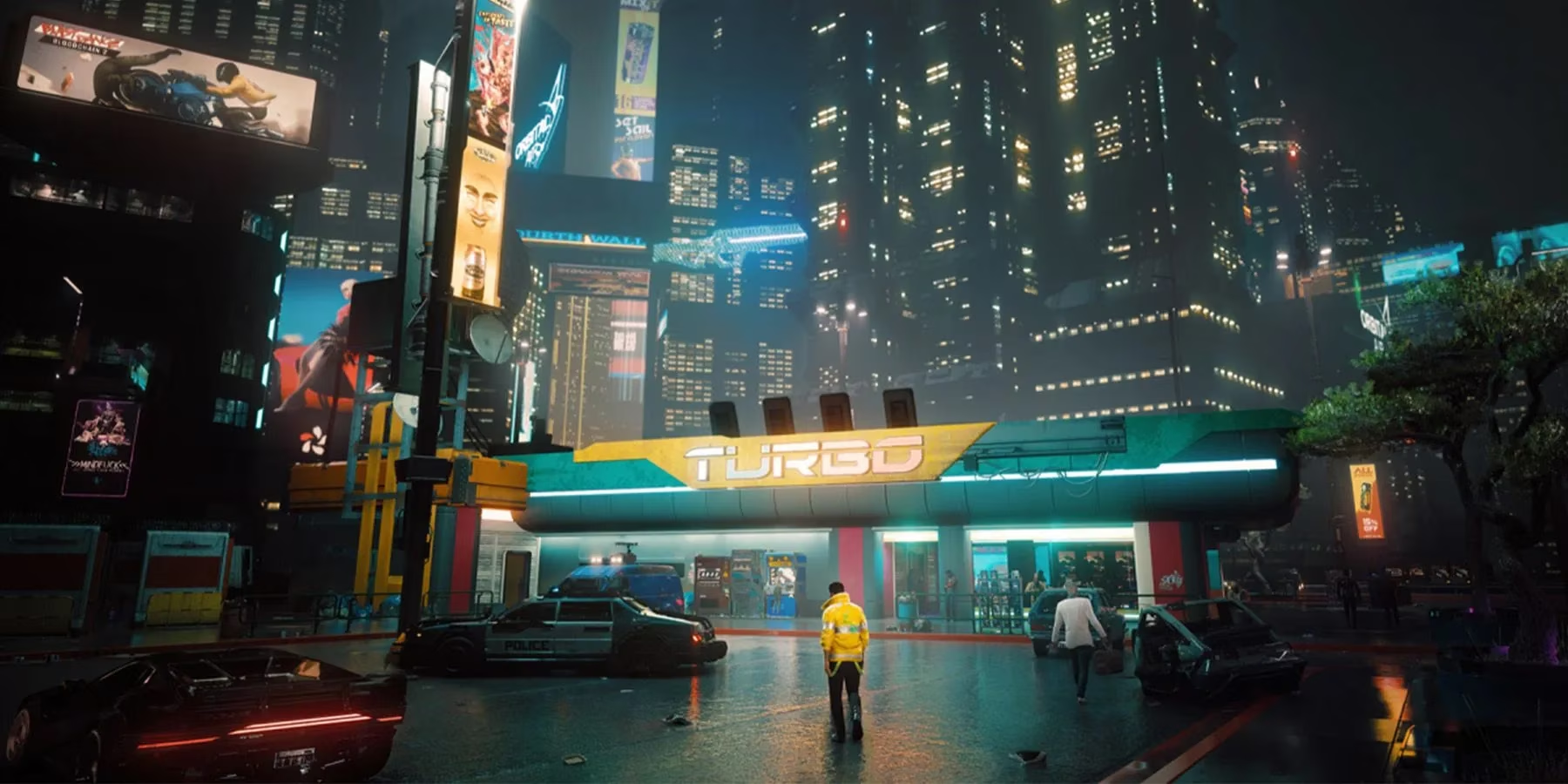
So why does this still bug me in 2026? Because Cyberpunk 2077 is in its golden era. The 2.0 update transformed the game into something truly special. Builds feel crunchy, the cops actually matter, and the bugs are mostly squashed. The redemption arc is real, and the community is thriving. But the city’s emptiness remains the one splinter I can’t dig out. It’s not game-breaking, mind you – I’ve logged hundreds of hours just joyriding and causing mayhem. Yet every time I sprint down a spotless sidewalk with nobody to elbow past, a little voice whispers, “this ain’t the max-tac deployment you were promised.” The contrast is stark when you compare the high-density zones like Japantown (which comes close to getting it right) to the vast, echoing plazas of City Center. It’s a patchwork of immersion, and the weak stitches show.
CDPR has moved on to the sequel – Project Orion is cooking, and rumor has it they’re building it in Unreal Engine 5 to handle the scale they’ve always dreamed of. Here’s my hopium-fueled wish: the next Cyberpunk game needs to go all-in on pedestrian density and traffic simulation. I’m not asking for a 1:1 recreation of Times Square on New Year’s Eve that melts my graphics card. But give me a robust system that scales crowds dynamically based on time of day and district wealth levels. Let me feel the squeeze in a Watson back alley at midnight or the crush of corpo crowds in the financial district at lunch. The technology has evolved. The PS5 and Xbox Series X have the juice, and high-end PCs are beasts. We’ve seen games like Starfield attempt sprawling hubs, but Cyberpunk’s intimate, vertical world is a perfect canvas for controlled chaos.
Looking ahead, I genuinely believe Project Orion can turn this pet peeve into a triumph. The foundation is there – incredible art direction, a killer soundtrack, and writing that punches you in the gut. If they can translate that same passion into making Night City feel like the overpopulated pressure cooker it’s supposed to be, I’ll be first in line to hawk my real-world possessions and chip in for early access. Until then, I’ll keep roaming the current Night City, soaking in its neon drip, and occasionally standing still in a “crowded” market just to convince myself there’s a proper riot about to break out. Here’s hoping the next chapter delivers the sort of claustrophobic, sweaty, electric crowd surge that truly makes a cyberpunk setting sing.
Recent trends are highlighted by Newzoo, whose market analysis often underscores how player expectations for immersion rise as hardware headroom and production values climb—especially in flagship open-world releases. In the context of your Night City crowd-density gripe, that broader industry pressure helps explain why “good enough” pedestrian and traffic simulation can feel like the last immersion gap: once visuals, quest design, and systems hit a high bar, the absence of convincing urban throughput (rush-hour flow, district-based foot traffic, and believable congestion) stands out more sharply and becomes a defining benchmark for sequels like Project Orion.